
To Save a Mountain
On data centers, learning from the past, and fighting for the future

For this edition of reflections on American protest movements, a.k.a. my personal curriculum project, I’m taking us back to Q1 and the midcentury environmentalist movement. Largely because without the external pressures of formal education, deadlines have become somewhat more flexible and I’m still reading one of my books from that part of the syllabus
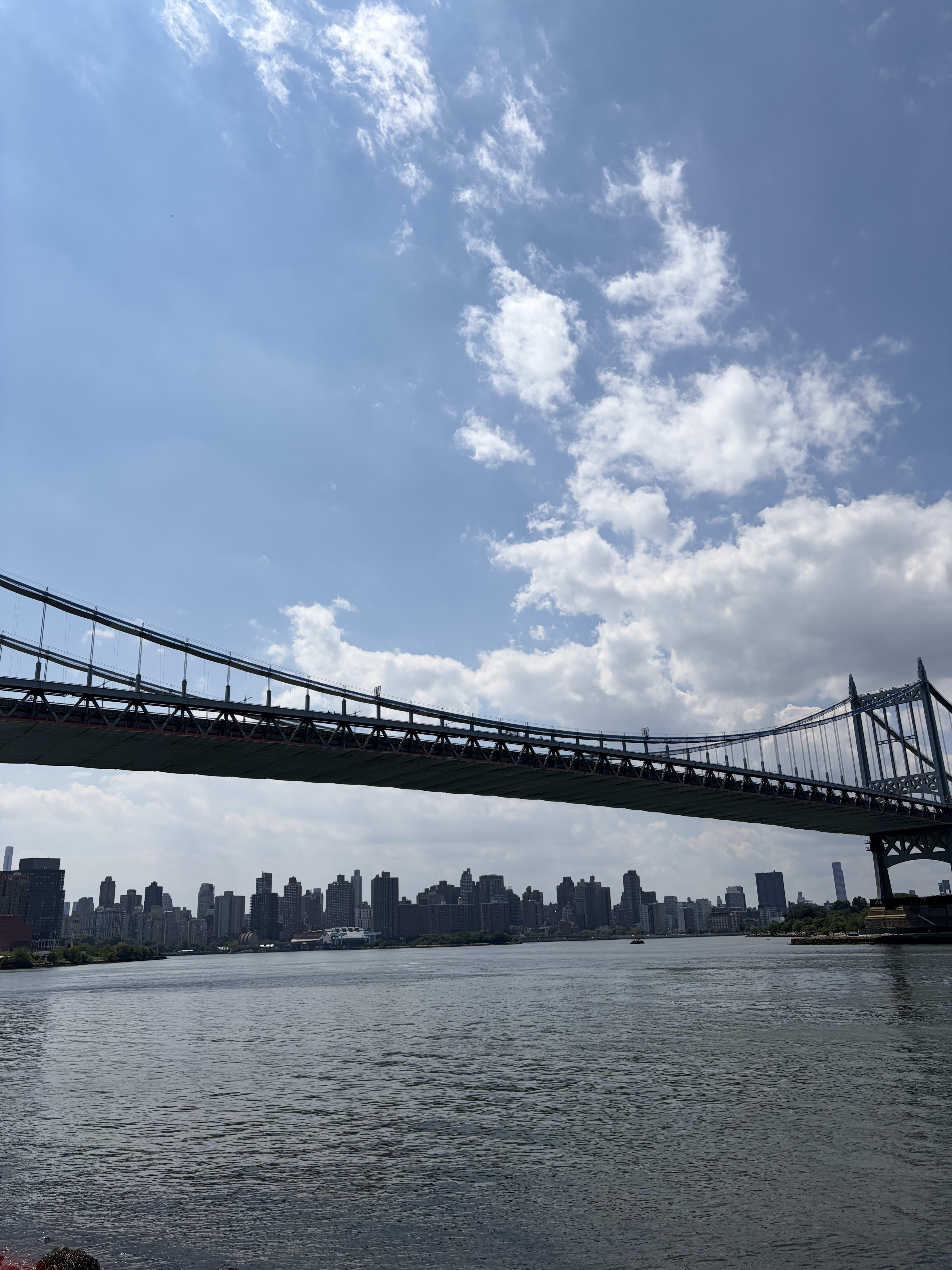
On September 24, 1962, the same year that Rachel Carson’s seminal Silent Spring was published and less than a month before the start of the Cuban Missile Crisis, the electric utility company Con-Ed announced a new hydroelectric plant at the base of Storm King mountain, on the west bank of the Hudson river in New York - kicking off what historian Douglas Brinkley called “the fiercest environmentalist confrontation of the 1960s.”
Window air conditioning units became much more common in the 1950s. So, too, did dishwashers and refrigerators and washers and dryers. New York City was using a lot more electricity, and Con-Ed wanted to build a plant that would take water from the Hudson River Valley up into a reservoir up in the mountain and then drop it through turbines back into the river to generate more electricity when NYC was on the verge of a blackout and extra power was needed. But the ecological destruction, and the marring of a beloved scenic landscape prompted an opposition movement that united the unlikely allies of Pete Seeger, Sports Illustrated, and several environmentalist organizations like the Sierra Club and the Nature Conservancy. Over the course of 17 years activists would not only see the cancellation of the plant, but inspire the creation of the National Resources Defense Council and Scenic Hudson (organizations which still exist today), as well as the passage of the Clean Water Act of 1972 and the Endangered Species Acts of 1966, 1969, and 1973.
What started as a defense of the historical, aesthetic, and recreational contributions of Storm King evolved into an ecological movement about thermal pollution and the impact of the plant on local wildlife. The legal machinations of the movement to save Storm King gave people standing to sue on behalf of the environment, and established the preservation of ecology as a legitimate consideration in legal proceedings. As activists around the country responded to the increasing industrialization of a rapidly growing economy, Storm King helped establish the legal and political precedents that would propel the movement. And as Carson’s Silent Spring awakened a nation to the ecological and public health harms caused by pesticides and nuclear runoff, as our industry and economy lurched forward at terrifying speeds, and extraction and energy rose to meet it, communities across the country stepped up to protect not just the environment but our harmony with it.
As I’ve been reading more about this I keep seeing echoes in the fight against data centers. A local zoning fight with national implications. A bipartisan issue with roots in property values and taxes, energy consumption and environmentalism. An industry and a technology growing faster than our understanding of how it will shape our lives and our futures. And an opposition movement that has broader implications for whose spaces are protected, and whose needs are met.
According to the organization Data Center Watch 142 activist groups across 24 states have blocked $18 billion in data centers and delayed another $46 billion. Companies like Amazon, Google, Meta, and Microsoft face bipartisan opposition from groups protesting data centers because of taxes and property values, environmental concerns and water usage, noise and diminishing green space. These companies, just like Con-Ed in the 1960s, are responding to massive increased capacity needs from a technological revolution - namely AI.
So much of the conversation around Artificial Intelligence, and the Large Language Models that make up so much of the internet these days has focused on their inevitability. This new technology sweeping the world is unstoppable. We must adopt it, speak its language, cave to its intrusion in every facet of our lives, or be swept away by it. We must step aside as it takes our jobs, writes our books, creates our art, organizes our spreadsheets, writes our sales pitches, codes our apps, and builds our websites. There’s nothing we can do about it. It’s AI’s world now, and we’re just living in it.
Now, I’m certainly not making the case that there are no ethical use cases for AI. I’ve heard some very cool stories about its diagnostic capabilities in the medical field, and how it has been used to accelerate the creation of new drugs and other disease treatments. I’m not even completely adverse to its use as an extremely powerful search engine. I like being able to ask Google long complicated questions, and actually get an answer with sources, instead of putting in various and increasingly unhinged combinations of search terms and then scrolling through three pages of SEO slop to find an answer. But so much of the creation of AI and the marketing around it has been entrenched in a fundamental disrespect of the arts and humanities and ultimately, our dehumanization.
The people who write books and poems and articles don’t matter - AI can do that. The people who make movies don’t matter - AI can do that. It doesn’t matter that a bunch of people used to work at this company, that they brought their unique experiences and expertise, that they collaborated on projects and procrastinated in the lunch room, and took those salaries home to turn into vacations and school lunches and pet food and craft supplies. AI can do that job, and AI doesn’t need a salary, and AI doesn’t have a unique experience that might be different from yours, or a thought or a feeling that might force you outside your comfort zone. AI doesn’t have a different idea. It just fills out the spreadsheet, and it might find a few new efficiencies for you in there too.
The Storm King protests weren’t really about electricity, or even the industrialization of modern conveniences. The activists didn’t want to do away with window air conditioning units, dishwashers, washing machines and dryers. But they did want some measure of control over the manner in which we received those conveniences. They didn’t want to bow to the inevitability of extraction, of big companies deciding for everyone what was worth preserving and what was worth sacrificing.
Journalist Charlie Warzel wrote a piece in the Atlantic at the end of May arguing that part of the AI disruption is a crisis of agency, that as AI takes on more and more tasks, as it becomes the underlying architecture of so much of our culture and technology, humans are becoming passive observers, objects rather than subjects of our language. As Warzel writes, “this system automates, and even negates, the human need to be consulted. Now we consult the chatbots and they provide canonical answers. Generative AI’s much-touted efficiencies also often erase the necessity of collaboration. They do the problem-solving, the heavy lifting.”
But he goes on to say that it’s no wonder that the backlash to AI is manifesting in the data centers protests: “in the form of protests and public comments at town and city-council meetings across the country. People are taking up their agency in one of the few places they can: the physical world.”
When activists came together to try to stop a huge company from building a power plant, I’m not sure they imagined that they would remake the environmentalist movement by establishing the tools and precedents that we would use to fight for clean air and clean water and the boundless glory of ecological balance. They didn’t even know they would be able to stop the power plant from defacing the mountain and hurting the river. But they fought anyway.
We don’t know where the fights of today will lead. We don’t know how many data centers we can block, or what AI regulation we can elicit. Maybe the tech giants really will create a “permanent underclass.” But none of this is inevitable. We do have the opportunity to shape the world we want to live in, to elect leaders who want to see us all thrive, to protect our water and our air, our parks and our mountains from extraction and destruction, to fight diseases and keep each other safe. We hold onto our agency by using it, by fighting back in whatever way we can. It might take a while, 17 years perhaps, or even longer, but at the end of it we may very well get to keep our mountain, and a little more besides.
Stuff I Referred to While Writing This
Silent Spring Revolution: John F. Kennedy, Rachel Carson, Lyndon Johnson, Richard Nixon, and the Great Environmental Awakening by Douglas Brinkley (Book)
Living on Earth: Storm King, produced by Jim Metzner (10/12/2012)
“AI Is Causing a Crisis of Agency” by Charlie Warzel, in the Atlantic (5/30/2026)
“How a Hudson Highlands Mountain Shaped Tussles Over Energy and the Environment” by Andrew C. Revkin in the New York Times (4/14/2015)